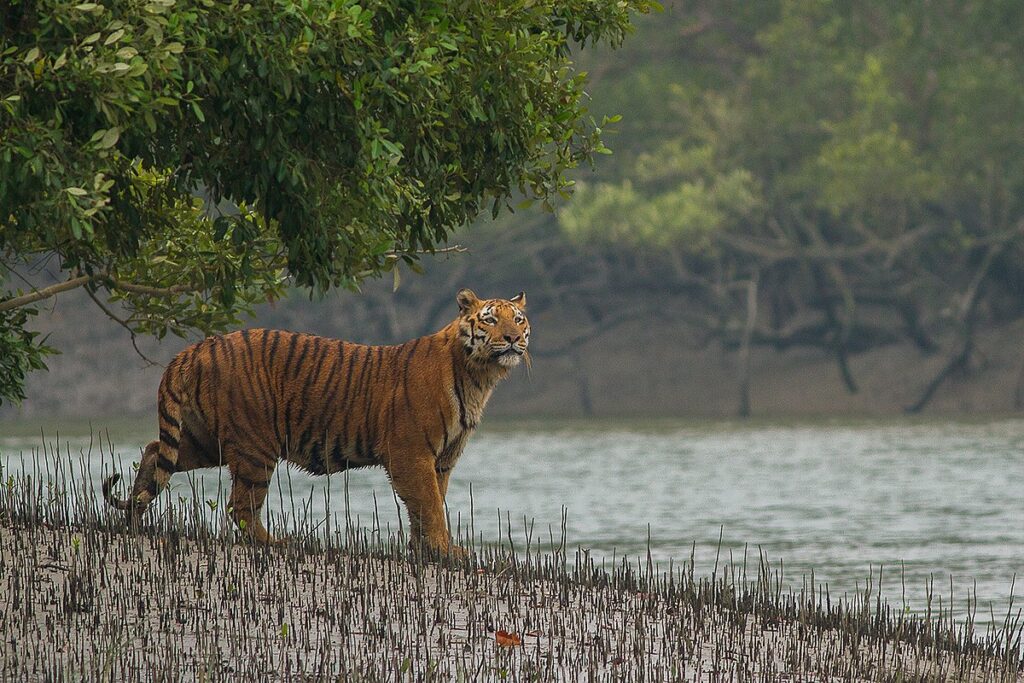
Embark on an adventure in the Sundarbans, the world’s largest mangrove forest and UNESCO World Heritage site. Journey through its intricate waterways, encountering the elusive Bengal tiger and a diverse array of wildlife. This exploration promises a unique opportunity to witness the richness of biodiversity in a globally significant ecosystem, creating lasting memories of nature’s wonders.
Sundarbans of the Mangroves
Where is Location:
The Sundarbans, located at the delta of the Ganges, Brahmaputra, and Meghna rivers in Asia, form one of the largest mangrove forests globally, spanning Bangladesh and India. Comprising tidal waterways, mudflats, and salt-tolerant mangrove trees, this unique ecosystem serves as a critical corner of the planet. Besides being a tourist destination, the Sundarbans is home to tens of millions of people.
Sundarban inBangladesh Map
Description:
Mangrove swamps, characterized by brackish to saline tidal waters, are challenging to navigate, known as “intertidal zones.” The mangrove trees have evolved unique adaptations, such as long roots, salt-blocking pores, and breathing bark, allowing them to survive in harsh saltwater environments. With approximately 70 species forming a diverse group, mangroves have shown limited evolution over millions of years, reflecting conservative taxa.
The evolutionary history of mangroves is linked to continental drift, with the oldest known fossils dating back 75 million years. Mangrove forests, present on various continents, act as “ecosystem engineers,” forming islands and providing a buffer against erosion and tropical storms. They serve as transitional ecosystems, linking marine and terrestrial environments, making them crucial for studying adaptive biology and evolution in salt-tolerant plants. Sundarbans’ flora features sundari, gewa, goran, keora, and Passur, vital for biodiversity and community uses.
Mangroves tree in sundarban
The Sundarbans, Earth’s largest mangrove forest, exemplifies nature’s resilience. Its mangrove trees, adept at braving saltwater environments, form a crucial buffer against erosion and tropical storms. Nurturing biodiversity, these remarkable ecosystems underscore the imperative of sustainable conservation for the intricate balance between coastal communities and the natural world.