Life cycle of butterfly
First stage:
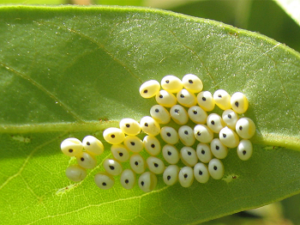
Butterfly eggs are usually found on or near the leaves of plants. Each egg will hatch and transform into a single butterfly. Butterfly eggs are small. Some butterfly eggs are as tiny as the tip of a pencil. The small eggs can be spherical, like a ball; oval, like a chicken egg; or cylindrical, like a can.
Second stage: 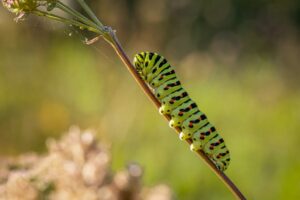
The larva(or caterpillar) stage begins when a tiny worm-like caterpillar hatches from the butterfly eggs.Butterfly cab be smooth or hairy.the can also have colourful or plain skin.
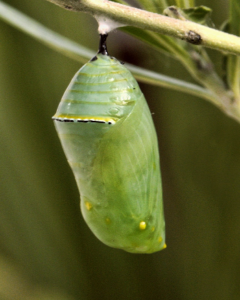
The pupa stage begins when a fully grown caterpillar has eaten enough food to transform once again. During this stage, the caterpillar hides inside a pupa or chrysalis. This is a protective shell that keeps the caterpillar safe while it changes into an adult butterfly. A chrysalis is similar to a small house: it keeps the pupa warm and makes it more difficult for intruders to disrupt the last transformation.
The outside of a chrysalis looks pretty plain. It often blends in with the surrounding area to hide from predators. The outside of the chrysalis may look dull, but a huge change is happening inside. This transformation can take as short as a week or as long as two years, depending on the species of butterfly.
Fourth stage: 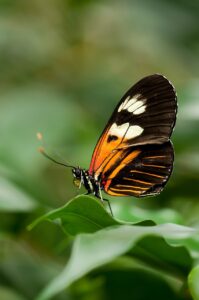 image source
The adult stage of the butterfly life cycle is what most people think of when we hear the word butterfly. The metamorphosis is finished when the butterfly exits the chrysalis. It is no longer a caterpillar, but an adult butterfly with wings.
When the butterfly leaves the chrysalis, its wings are soft and wet. Wet wings are like a wet paper towel. It is too difficult for a butterfly to fly with floppy wings. It takes a few minutes for the wings to dry and become stiff. A butterfly can take its first flight once its wings are strong.