- Sheikh Mujibur Rahman
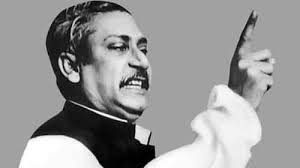
Sheikh Mujibur Rahman (Bengali: শেখ মুজিবুর রহমান Sheikh Mujibur Rahman; March 17, 1920 – August 15, 1975) was a Bengali political leader in East Pakistan and the founding leader of Bangladesh. He headed the Awami League, served as the first President of Bangladesh and later became its Prime Minister. He is popularly referred to as Sheikh Mujibur Rahman, and with the honorary title of Bangabandhu (বঙ্গবন্ধু Bôngobondhu, “Friend of Bengal”). His eldest daughter Sheikh Hasina Wajed is the present leader of the Awami League and a former prime minister of Bangladesh.
A student political leader, Mujib rose in East Pakistani politics and within the ranks of the Awami League as a charismatic and forceful orator. An advocate of socialism, Mujib became popular for his leadership against the ethnic and institutional discrimination of Bengalis. He demanded increased provincial autonomy, and became a fierce opponent of the military rule of Ayub Khan. At the heightening of sectional tensions, Mujib outlined a 6-point autonomy plan, which was seen as separatism in West Pakistan. He was tried in 1968 for allegedly conspiring with the Indian government but was not found guilty. Despite leading his party to a major victory in the 1970 elections, Mujib was not invited to form the government..
- Ziaur Rahman
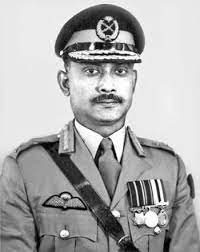
Ziaur Rahman (Bengali: জিয়াউর রহমান Ziaur Rôhman) (January 19, 1936 – May 30, 1981) was the President of Bangladesh and the founder of the Bangladesh Nationalist Party. Popularly called Zia, he is also sometimes referred to as a Shaheed (Martyr). His widow Begum Khaleda Zia has served as Prime Minister of Bangladesh three times.
An officer in the Pakistan Army, Zia’s unit captured the Kalurghat radio station at the onset of the Bangladesh Liberation War and declared the independence of Bangladesh on behalf of Sheikh Mujibur Rahman. Recognised as a war hero, he was honoured with the Bir Uttom in 1972. A high-ranking officer in the Bangladesh Army, Zia was appointed chief of army staff following the assassination of Sheikh Mujibur Rahman in 1975. Although briefly overthrown in a counter-coup, Zia returned to power in a military coup organised by Colonel Abu Taher. Declaring himself president in 1977, Zia won a referendum held in 1978. Founding the Bangladesh Nationalist Party, Zia won widespread popular support for stabilising the nation and leading it in a new direction. A right-wing politician, Zia established free-market policies in a 19-point programme of industrialisation and development. He adopted policies bringing the government increasingly under Islam, which he included in the national constitution. Zia controversially pardoned the assassins of Sheikh Mujib by signing the Indemnity Act and rehabilitated individuals who had supported the Pakistan Army. A popular yet controversial leader, Zia was assassinated in 1981 in an abortive military coup.
More : https://www.digitalit-inst.com/dm/bangladesh-historical-palace-ahsan-manzil/